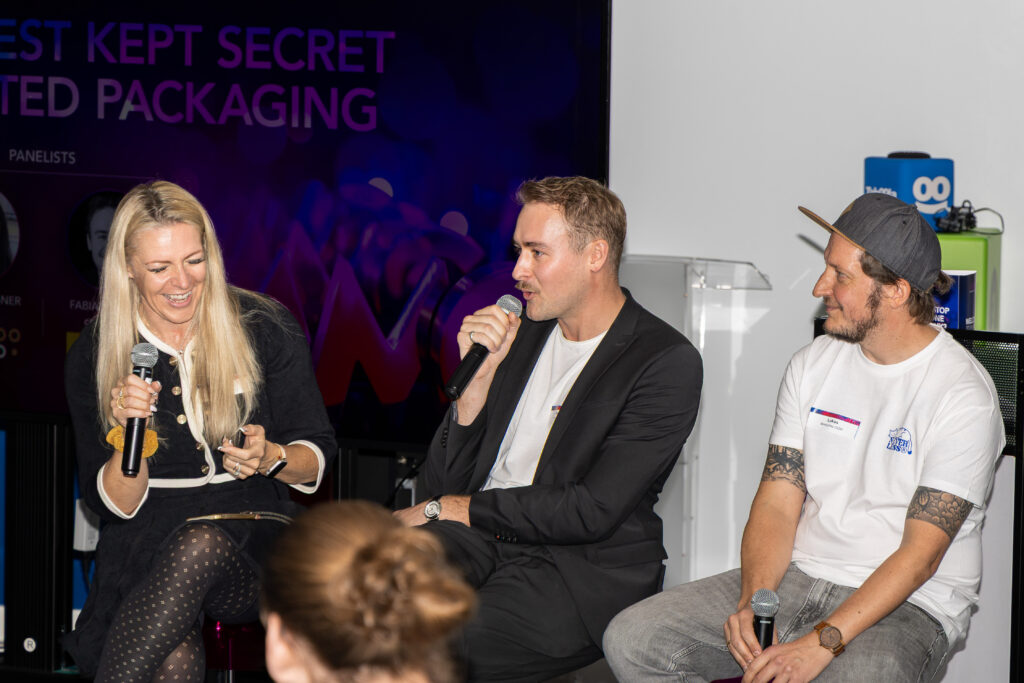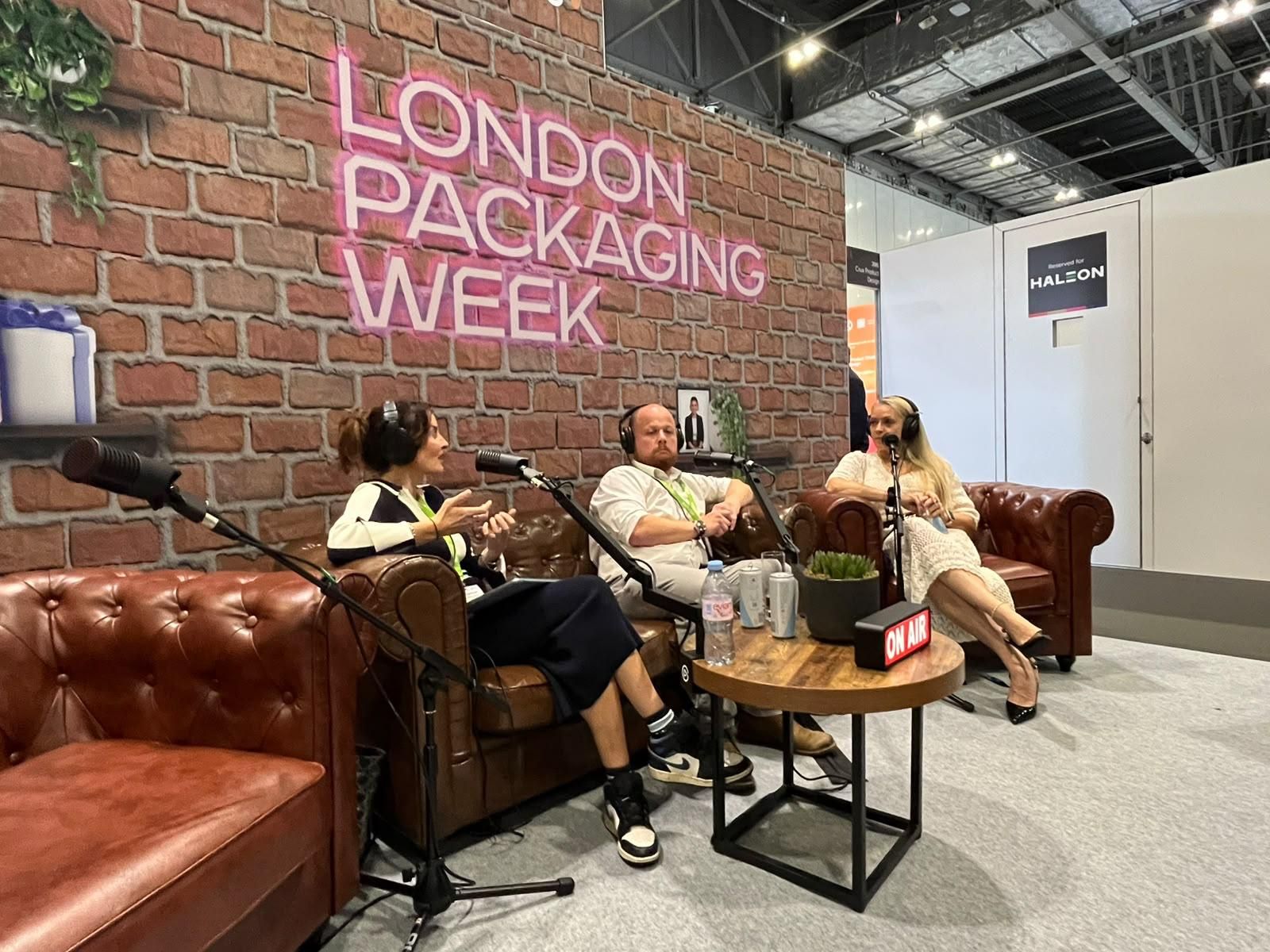
On day two of Easyfairs‘ London Packaging Week I was back on the AuraVeo podcast stage, this time with Tom Stone, Packaging Lead at Greencore, and Elena Knight, Marketing and Content Director at FuturePrint.
The session title was a statement, not a question: static packaging is finished. Day one had covered why it’s changing, with more than 80% of brands now involved in connected packaging according to our 2026 Global Connected Packaging Survey. Day two was about what it takes to actually do it.
Not dead, evolved
Tom pushed back on the title in the best way. Packaging still has to protect and promote the product. But we’re asking it to do far more, and technology lets it carry that extra load without cluttering the pack.
He was also realistic. Consumer behaviour won’t change overnight, so on-pack messaging still matters. The connected layer is how you help that change along.
What it really takes: Greencore’s ready meals
Greencore makes ready meals for brands across the UK and beyond, and Tom walked us through an ongoing project to make those packs connected.
The list of things that can’t be compromised is long. Shelf appeal and purchase intent. Materials that work for the consumer at home. Production in a highly automated environment. Recyclability legislation. And now, a QR code or digital watermark printed in line, at speed, that has to scan every time.
Greencore already uses static QR codes on its lines to check the right pack is on the right product. It is now trialling GS1 QR codes, a big job across 36 manufacturing sites and around 300 production lines.
The pay-off is broad. Traceability to batch level. Less food waste. Recalls that pull specific packs rather than a whole line. The ability to measure carbon from factory to fridge, which matters with more regulation on the way.
The stakeholder nobody mentions: IT
Tom’s most useful point was about who needs to be in the room. Packaging, to make sure inks adhere and codes are readable on each substrate. Technical, to validate before anything leaves the factory. Engineering, for line impact. Marketing, for anything consumer-facing. And IT, to run software that prints codes at high speed and makes them scannable at the till.
IT rarely features in packaging conversations. On connected projects it is essential.
Start with the end of life
Elena explained the Sustainable Print Manifesto, which FuturePrint facilitates: a set of nine shared principles to give the value chain a common language on sustainability.
Two principles speak directly to packaging. Optimise design for purpose, because roughly 80% of a product’s impact is decided at the design stage. And use finishing and embellishments responsibly. Embellishments make packaging sing, but the wrong foil or laminate can turn a recyclable pack into landfill.
Her message: think about where the product ends up from day one. Don’t bolt sustainability on at the end.
Static QR vs connected experience
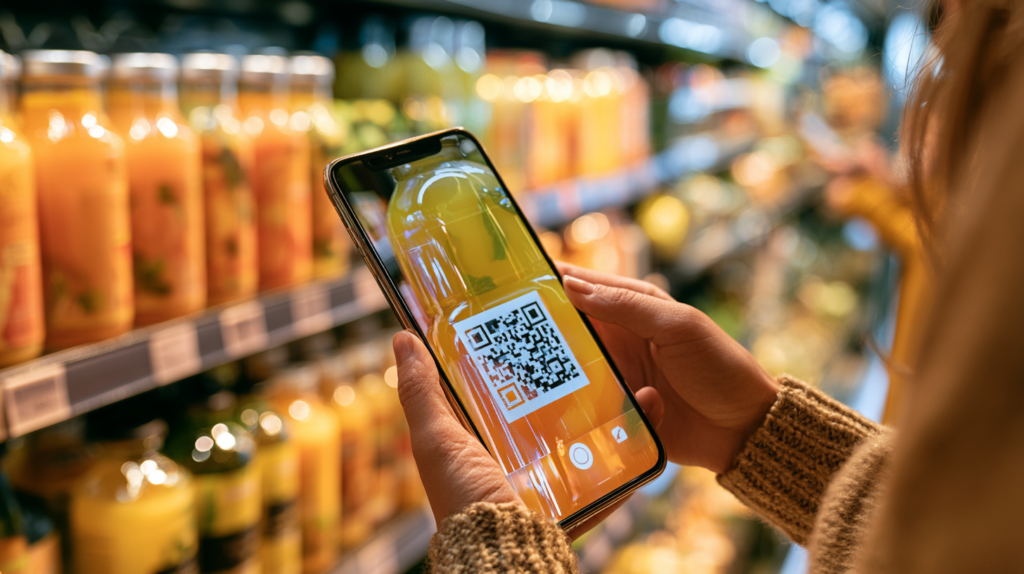
Elena put the difference neatly. A static QR code pointing to a PDF becomes printing waste the moment the information changes. A dynamic one can be updated online and becomes your data backbone, ready for the Digital Product Passport.
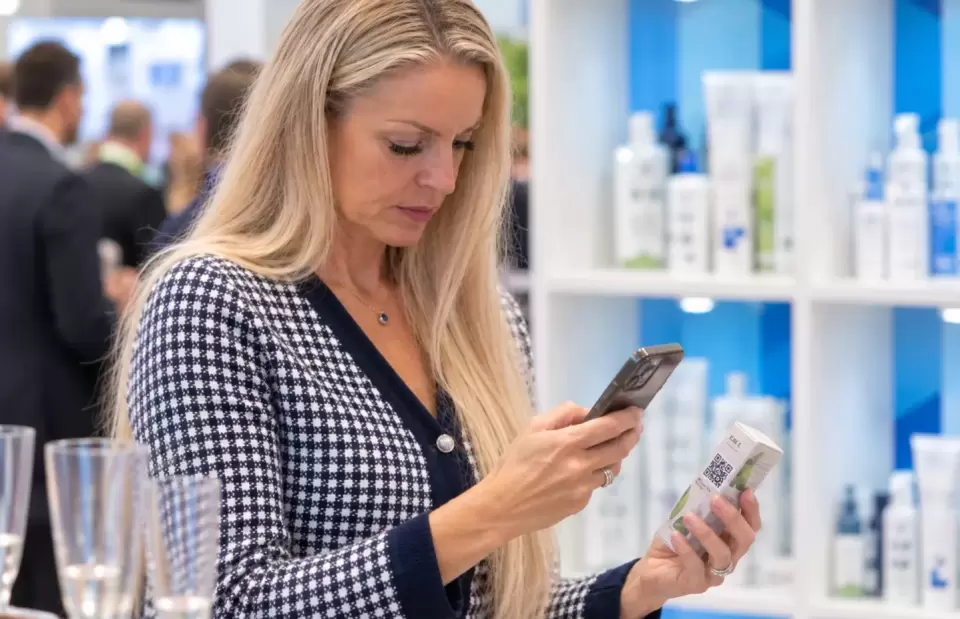
And it can do far more: provenance, allergens, recycling points nearby, virtual try-on for beauty. Each shopper sees what matters to them.
We also talked about inclusion. AuraVeo’s AI companion can read a pack aloud to a visually impaired shopper. And the questions people ask it are gold. If everyone asks how long to microwave something, the pack isn’t telling them.
Data brands have never had
Tom raised a point every manufacturer will recognise. Products go through retailers, so tracking stops at the depot. Connected packs give brands a direct view of how consumers interact with their products, which can shape both product and pack.
Don’t wait for perfect
Tom expects adoption to follow a familiar pattern: one brand moves, others notice, and the category follows. Elena’s closing advice sums up the whole session: don’t let perfect get in the way of good enough. Start.
FuturePrint is launching the Sustainable Print Manifesto implementation framework, a free maturity model with suggested KPIs, at the FuturePrint packaging show in Valencia. Find out more: [add FuturePrint link].
Listen to the full episode above, and catch episode 1 with AuraVeo’s Sandra Wagner [add link].
Thank you to Tom, Elena, AuraVeo and Easyfairs.